Wayward Heroes
Wayward Heroes is a 2D auto-battler roguelike developed in Unity 6, focused on progression-driven gameplay and modular system design. Players recruit heroes, engage in automated battles, and strengthen their roster through gear, upgrades, and long-term progression systems. The game features wave-based combat with increasingly challenging enemies, encouraging players to refine their team composition and optimize their build over time. Players earn coins and upgrade balls through gameplay and a Plinko-based reward system, which is used to unlock new heroes, upgrade stats, and enhance equipment. The project is built around a data-driven architecture using Scriptable Objects, allowing all core content such as heroes, enemies, levels, gear, and upgrades to be created, configured, and extended without modifying gameplay code."
Key Features
- Auto-battle combat system with multiple heroes and enemies interacting simultaneously.
- Fully data-driven architecture using Scriptable Objects for heroes, enemies, levels, gear, and upgrades.
- Hero recruitment and upgrade system with scalable stat progression.
- In-run upgrade system allowing players to enhance heroes during each run with build-defining bonuses.
- Gear system with multiple rarity tiers and dynamic stat modifiers.
- Roguelike progression loop with increasing difficulty and replayability.
- Plinko-based reward minigame where players earn balls used to purchase upgrades and progression items.
- Account-level upgrades providing persistent progression across runs.
- Save and load system preserving player progress, upgrades, and unlocked content.
- Cross-platform deployment for PC and Android.
Screenshots
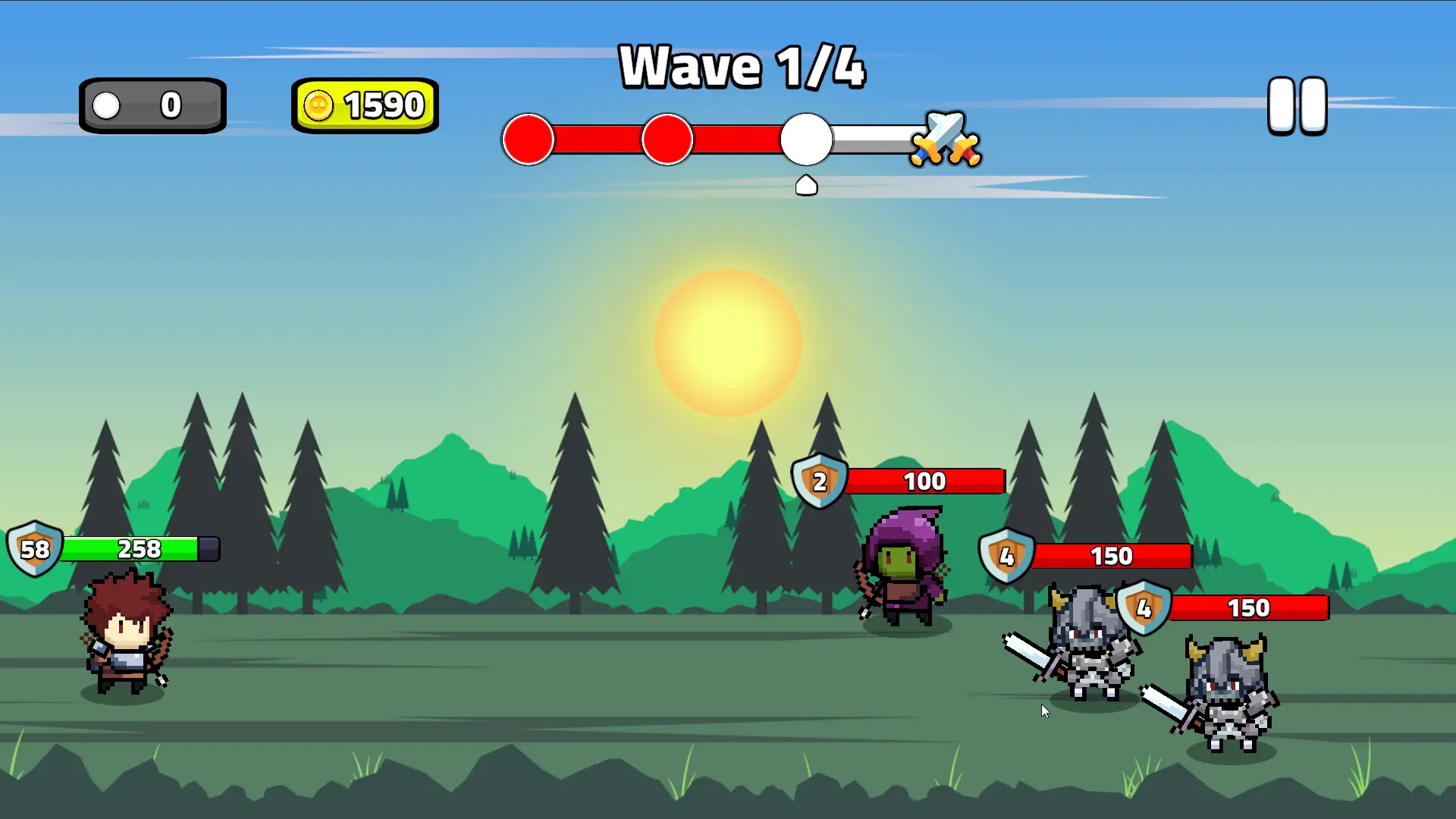
Challenges & Solutions
Challenge
Designing a scalable system architecture capable of handling multiple interconnected gameplay systems (heroes, enemies, gear, upgrades) without tight coupling.
Solution
Implemented a fully data-driven architecture using Scriptable Objects, allowing independent configuration of gameplay elements while keeping systems modular and maintainable.
Challenge
Balancing layered progression systems to ensure both short-term engagement and long-term player retention.
Solution
Structured progression across multiple layers including run-based rewards, gear upgrades, and account-level bonuses to create a consistent sense of progression.
Challenge
Persisting complex player data across sessions without introducing instability or data inconsistency.
Solution
Developed a structured save/load system using serialized data to reliably store player progress, unlocked content, and upgrade states.
Project Overview
Technologies
Development Process
Wayward Heroes was developed as a system-focused project emphasizing modular architecture and scalable progression design. The foundation of the project was built around a data-driven approach using Scriptable Objects to define and manage all gameplay content. Development began with the core combat loop and enemy wave system, followed by the implementation of hero management and stat progression. Once the base systems were stable, additional layers such as gear rarity, upgrade mechanics, and the reward system were introduced. A dedicated phase focused on implementing persistent data handling through a save and load system, ensuring player progress and unlocks were reliably maintained across sessions. The final stage emphasized balancing progression pacing, refining UI feedback, and optimizing performance for both PC and Android platforms.
Timeline
Month 1
Core auto-battle system, enemy waves, and foundational architecture setup.
Month 2
Hero systems, stat progression, and Scriptable Object data structures.
Month 3
Gear system, upgrade mechanics, reward systems, and progression balancing.
Month 4
Save/load system implementation, UI polish, optimization, and cross-platform testing.